Geological Divergence: Glacial Trench vs. Prealpine Sinks
German alpine hydrography encompasses two starkly different physical settings. In the southeastern corner of Bavaria lies Königssee, a fjord-like body of water pinned between the precipitous limestone walls of the Watzmann (2,713m) and the Hagengebirge inside Berchtesgaden National Park.
Conversely, roughly 250 kilometers to the west in the alpine foreland, Lake Constance (the Bodensee) occupies a vast tectonic and glacial depression fed by the Rhine river. Shared among Germany, Austria, and Switzerland, Lake Constance serves as a biological and transportation bridge between the central alpine massif and the rolling swabian hills.
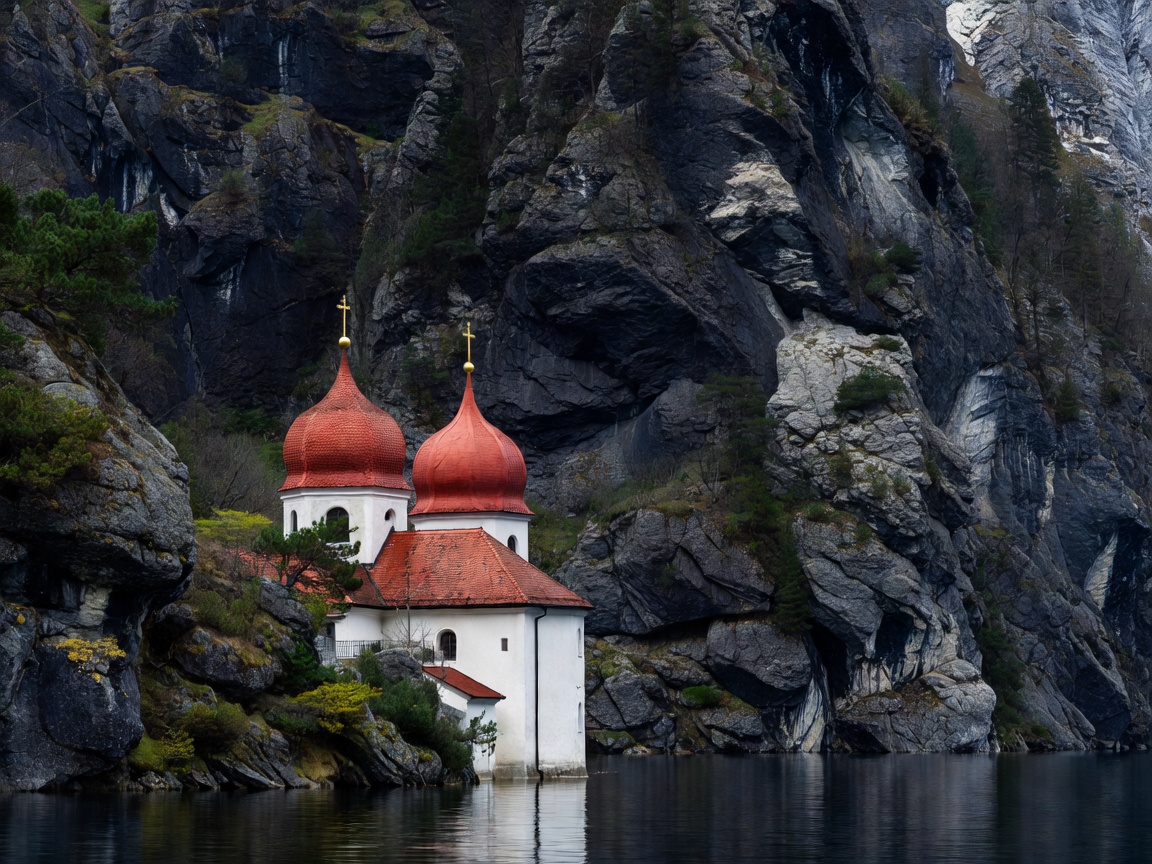
Königssee: Century-Old Electric Navigation & Mountain Silence
Königssee is widely recognized as one of the cleanest bodies of water in Europe. To protect this ecological treasure within Germany’s only high-alpine national park, Prince Regent Luitpold of Bavaria decreed in 1909 that passenger water transport must operate solely via quiet electric propulsion.
Today, a fleet of 18 handcrafted mahogany electric vessels operated by the Bayerische Seenschifffahrt glides silently across the 8-kilometer lake. Because there are no roads, footpaths, or cycling paths skirting the shoreline—the sheer limestone cliffs drop directly into the 190-meter-deep water—these vessels constitute the only practical access to the interior valley.
Midway across the lake, the boat halts against the rock face known as the Echowan, where a crew member plays a brass flugelhorn to demonstrate the multiple echoes bouncing cleanly off the vertical rock face before proceeding to the historic hunting lodge and red onion domes of St. Bartholomä.
Hiking Onward to Obersee & the Röthbach Waterfall
Passengers continuing to the southern terminal at Salet can embark on a foot trail leading to the Obersee, a smaller glacial lake separated from Königssee by an ancient rockfall moraine. Mirror-like reflections of the Hagengebirge cliffs frame the picturesque wooden fishing hut at the far shore. Beyond the Obersee, the trail continues to the foot of the Röthbachfall, Germany's highest waterfall, cascading 470 vertical meters in two sheer drops.
Limnological Profile
Due to its extreme depth and steep rocky walls that limit solar heating, Königssee remains cold throughout the summer, rarely exceeding 16°C to 18°C at the surface. It is home to healthy populations of Arctic char (Salvelinus alpinus), a cold-water fish prized in regional Bavarian culinary traditions.
Lake Constance (Bodensee): The Multi-National Maritime Basin
With a surface area of 536 square kilometers, Lake Constance is the third largest freshwater lake in Central Europe. Unlike Königssee's rugged isolation, the Bodensee features an expansive Mediterranean-like ambiance. It is legally unique: no international treaties define formal borders across the central deep-water zone (the Obersee), making it a shared condominium managed harmoniously by Germany, Austria, and Switzerland.
The lake moderates regional temperatures, supporting extensive vineyards producing Müller-Thurgau and Spätburgunder wines, as well as the famed fruit orchards of the German northern shore around Lindau, Friedrichshafen, and Meersburg.
Active Cycling: The Bodensee-Radweg
One of Europe’s most celebrated long-distance cycle routes, the Bodensee-Radweg circles the entire lake for roughly 260 kilometers through three sovereign nations. The route is predominantly flat, separated from vehicle traffic, and thoroughly integrated with passenger catamarans and car ferries, enabling cyclists to split the circumference into relaxed daily stages.
Key cultural and navigational landmarks include the island town of Lindau with its Bavarian lion harbor gate, the UNESCO prehistoric pile dwellings (Pfahlbauten) at Unteruhldingen, and the flower island of Mainau, where subtropical plants flourish outdoors thanks to the water's thermal buffer.
Technical Contrast: Königssee vs. Lake Constance
| Parametric Measure | Königssee (Berchtesgaden) | Lake Constance / Bodensee (Tri-Border) |
|---|---|---|
| Altitude | 603 m | 395 m |
| Surface Area | 5.22 km² | 536 km² |
| Maximum Depth | 190 m | 251 m |
| Water Volume | 0.51 km³ | 48 km³ |
| Vessel Restrictions | Electric passenger fleet only • Private motors banned | Regulated commercial ferries, sailboats, motorboats |
| Primary Rail Termini | Berchtesgaden Hbf (Bus connection to Seelände) | Lindau-Insel • Konstanz Hbf • Friedrichshafen |
| Major Outdoor Activities | High alpine trekking, climbing, mountain hut traverses | Long-distance cycling, sailing, windsurfing, rowing |
Field Assessment & Logistical Advice
Pros & Highlights
- Unmatched environmental stewardship: Königssee’s century-old electric propulsion sets the gold standard for sustainable national park access.
- Tri-national cycling infrastructure: Lake Constance provides seamless borderless transit with uniform cycleway signage and frequent cross-lake ferry shortcuts.
- High peak contrasts: Direct access from both basins to world-class alpine hiking, from the Watzmann crossings to the Säntis massif overlooking the Bodensee.
Challenges & Seasonal Considerations
- Königssee ticketing bottlenecks: During peak summer weekends, electric boat departures sell out hours in advance; booking first morning departures online is essential.
- Bodensee summer storms: Because of the vast open expanse of the Obersee, sudden squall warning systems (orange flashing lights positioned around the shore) must be strictly observed by small watercraft.